
New Forest LPA BNG
Biodiversity Net Gain in New Forest District, from the Lower Test marshes to the Avon Valley. Expert BNG support and access to local BNG units.
.avif)
Trusted by Developers and Landowners







Biodiversity Net Gain in New Forest Local Planning Authority
New Forest District Council is the planning authority for the part of the district outside the National Park, which occupies the central portion. The area outside the Park is organised around three areas: Totton and the Waterside, the South Coastal Towns, and the Avon Valley and Downlands. The Lower Test Nature Reserve at Totton, 160 hectares of floodplain meadow, marsh and reedbed, carries Ramsar, SSSI and SPA status, and the River Avon through Ringwood and Fordingbridge is part of the Avon Valley Ramsar site and the River Avon System SSSI. Lymington town is in the district council’s planning area, not the National Park’s: the Authority handles only peripheral parts of the Lymington and Pennington parish, such as Upper Pennington, Gordleton, Buckland Rings and the Pennington Marshes.
Biodiversity Net Gain became a legal requirement for major developments in England on 12 February 2024, and for small sites on 2 April 2024. The council had already asked for it: since July 2020, when its Local Plan 2016-2036 Part 1 was adopted, major development has had to deliver a minimum 10% enhancement. The council has not adopted a BNG Supplementary Planning Document, and its list of adopted SPDs covers other topics such as parking, air quality and climate change. The Place Local Plan review, with a call for sites completed at the end of 2024, says there are opportunities to exceed 10%.
Off-site delivery is often needed, and the council has run a call for projects inviting landowners to put forward land for biodiversity gain, nutrient mitigation or both. Nutrient neutrality applies on two fronts: nitrates in the Solent catchment, which covers Totton and the Waterside and the South Coastal Towns, and phosphates in the Hampshire Avon catchment, which covers the Avon Valley and Downlands. The council publishes a list of credit providers for each.
Habitats in New Forest Local Planning Authority
.avif)
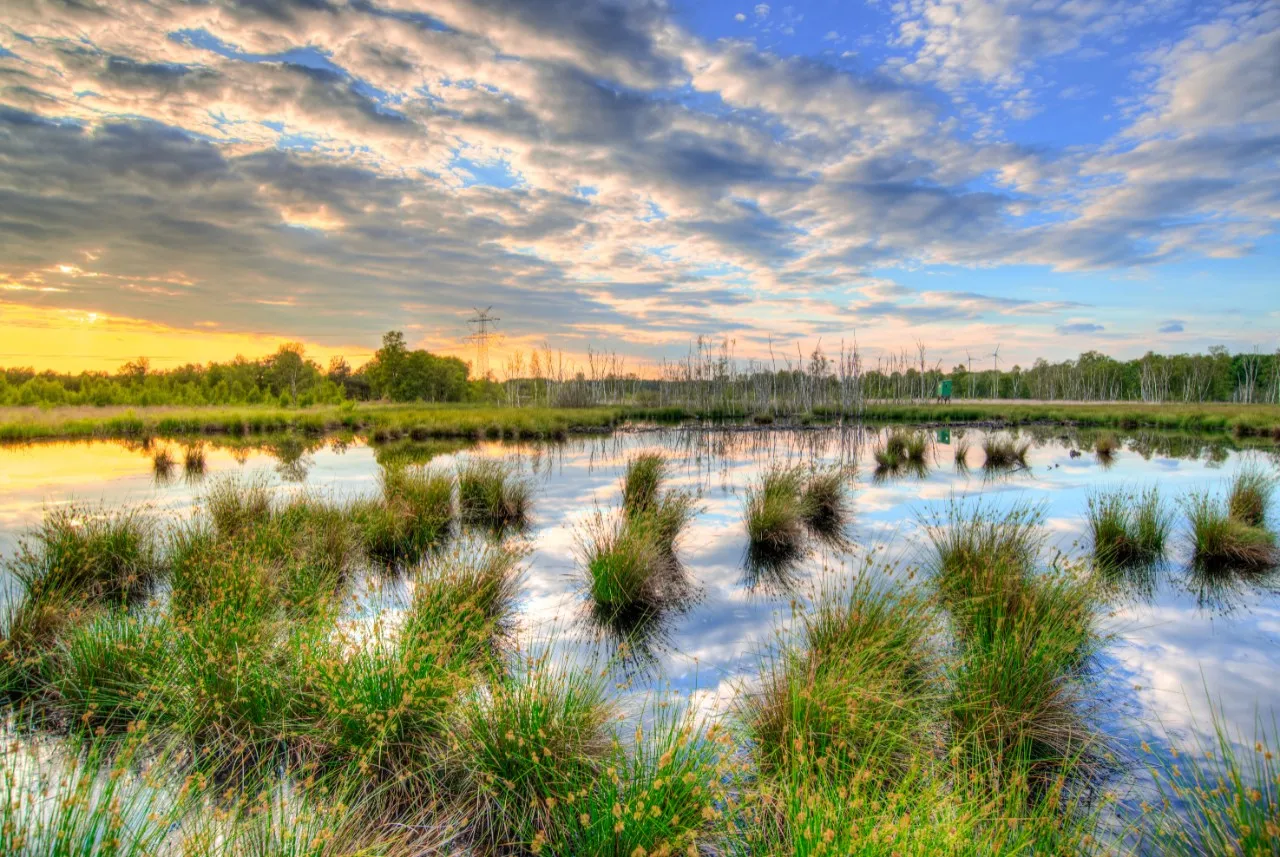
The district outside the Park is a coastal and river-valley landscape of marsh, estuary and floodplain.
- Chalk River and Wet Meadows: the River Avon through Ringwood and Fordingbridge, in the Avon Valley Ramsar site and River Avon System SSSI, known for water-crowfoot, Atlantic salmon and lamprey.
- Coastal Marsh: the Keyhaven-Lymington marshes next to Lymington, with SSSI and SPA designations; the Lymington and Pennington Marshes themselves lie within the National Park.
- Estuary and Intertidal Habitat: Southampton Water and the Solent, covered by the Solent and Southampton Water Ramsar site and Special Protection Areas, which border Totton and the Waterside.
- Floodplain Meadows and Reedbeds: Lower Test Nature Reserve at Totton, with over 450 wildflower species, wintering wigeon, teal and snipe, and tidal flooding that keeps the grassland free of winter frost.
New Forest LPA BNG Planning
High distinctiveness habitats such as lowland heathland, ancient woodland, and wet woodland are critical to achieving meaningful biodiversity net gain and require strict protection and sensitive management.
Lower distinctiveness habitats, including improved grassland, offer additional opportunities for enhancement and habitat creation.

Totton
Lymington
New Milton
Ringwood
Fordingbridge
Get notified of a scheme
We do not currently have any schemes covering this LPA.
Get notified when a scheme is available in this area.
Discover Schemes in
New Forest LPA
LPA
Restoring ecosystems and creating sustainable habitats
through BNG and nutrient mitigation.
Shavington Estate
Shavington Estate
Hurst Farm
Hurst Farm
Essex BNG at Priors Farm
Essex BNG at Priors Farm

Somerset BNG Scheme
Trinity Farm & Eastcombe Fields
Tees Nutrient Mitigation
Tees Nutrient Mitigation Scheme
.jpg)
Wiltshire BNG at Lydeway
Land at Lydeway
.jpg)
Herefordshire BNG at Hampton Wafre
Hampton Wafre Farm
Are you looking to start a BNG scheme?
Talk to Greenshank and explore the opportunities we offer through your land.
Latest News
A step-by-step guide for landowners looking to sell their land as BNG units, and how Greenshank can help at every stage of the process.
.webp)
Find out how biodiversity net gain legislation works under the Environment Act 2021, what it requires, and which developments are exempt.
Find out how nutrient mitigation schemes work for landowners, how nutrient credits are generated, and how to combine nutrient and BNG income.