
Understanding the Mitigation Hierarchy


Thousands of words have been written about the UK's flagship biodiversity net gain (BNG) policy since it became English law in February 2024,1 but less focus has been given to the mitigation hierarchy, which precedes every other stage of the BNG process.
The purpose of biodiversity net gain is to ensure wildlife habitats affected by development are improved by at least 10%, using on-site, off-site, and statutory biodiversity credit solutions. The mitigation hierarchy aims to head all that off at the pass in just four steps.
This guide will dig into the mitigation hierarchy, exploring its origins, and detailing those four steps. We will also look at how the mitigation hierarchy underpins - but should not be confused with - the biodiversity gain hierarchy that developers must follow to achieve the legally required, minimum 10% BNG uplift.
What Is the Mitigation Hierarchy?
In simple terms, the mitigation hierarchy is the principle that avoiding harm to nature is always preferable to reducing harm, which is in turn preferable to repairing harm, which is in turn preferable to compensating for harm elsewhere.2
Originally a 1970s land-use planning tool in the United States, the mitigation hierarchy has been adopted by around 40 countries as a way to achieve no net loss of biodiversity.3 It is at the heart of many international environmental and social impact assessments,4 while in England, the mitigation hierarchy is part of the National Planning Policy Framework.5
It states that planning for a development should be refused if: "significant harm to biodiversity resulting from a development cannot be avoided (through locating on an alternative site with less harmful impacts), adequately mitigated or, as a last resort, compensated for".
This clear roadmap prevents developers of projects from automatically resorting to offsetting any impact on habitat.
The Steps of the Mitigation Hierarchy
The mitigation hierarchy comprises four key steps, and developers must properly consider each one in the strict order listed below:
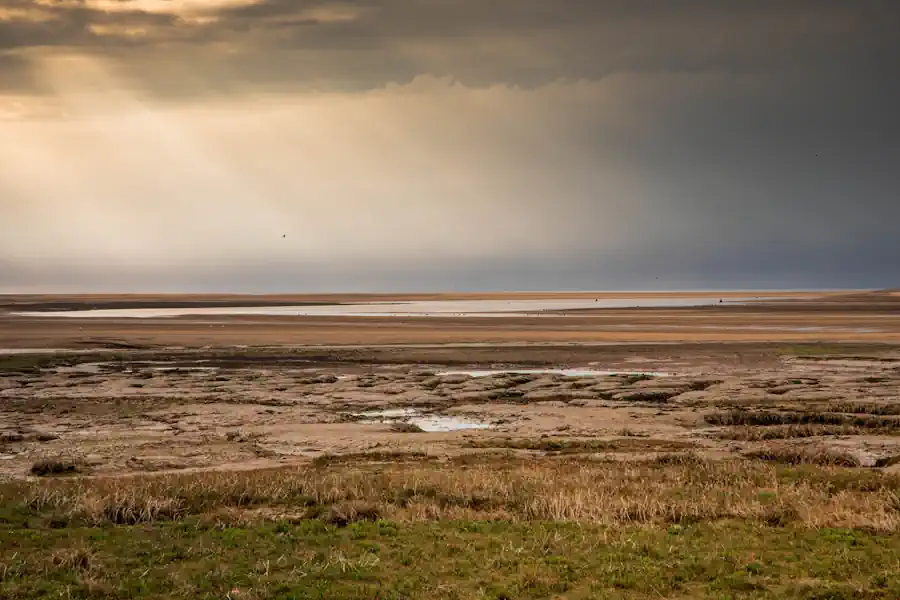
Step 1: Avoidance
Avoidance is widely seen as the most important step in the mitigation hierarchy, because it is the only step that guarantees no environmental damage occurs at all.
It does mean asking lots of questions about a potential development. Is the red line boundary located near, encroaching on or close to a high-priority habitat? Can the project be moved to a site that's less sensitive? Will any on-site habitat remain untouched by the development?6
Unfortunately, avoidance can be easily missed by developers who only start thinking seriously about biodiversity net gain after a lot of design work has been done. Talking to an ecologist as early as possible in the process creates the best chance of identifying genuine avoidance opportunities.
Step 2: Minimisation
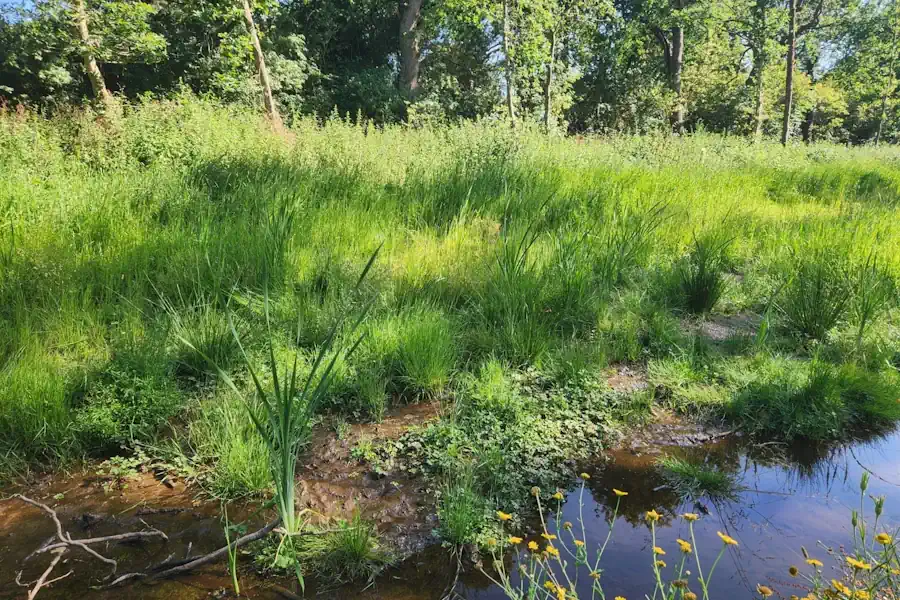
If a developer can't avoid any impact on a habitat, then minimisation is the next step. It can cover a wide range of measures, including changes to the project's design, a cut in its footprint, the timing of construction works so wildlife or the local community are not disturbed, and efforts to limit habitat fragmentation.7
Minimisation tends to be more visible and tangible than avoidance, since the measures taken are often physically apparent on site. This can demonstrate to the local planning authority that genuine effort has gone into reducing environmental harm.
Step 3: Restoration
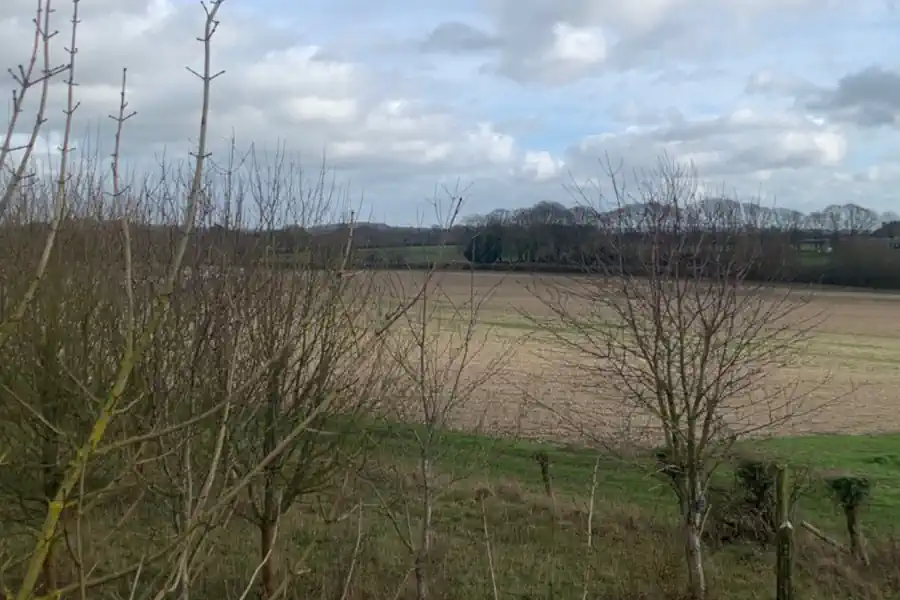
Restoration (sometimes called mitigation or rehabilitation), involves repairing any damage caused by the project. This can cover the development site itself or habitat that has been impacted by construction activity.
Measures can include reinstating temporarily disturbed grassland, replanting hedgerows removed for site access, or rehabilitating soil structure that was degraded during a building phase. It's at this point that the mitigation hierarchy and biodiversity net gain start to dovetail.
Developers not only have to restore the habitat as closely as possible to its original condition, they are legally obliged to deliver a measurable increase in biodiversity of at least 10%.
Where restoration alone cannot fully address any environmental impact, the final step of the mitigation hierarchy - offsetting - comes into play.8
.webp)
Step 4: Offsetting
Under the biodiversity net gain policy, offsetting is delivered by creating new habitat, either on-site or, if the minimum 10% requirement can't be met, via off-site BNG units bought from registered habitat banks.
In situations on-site and off-site gains cannot achieve the mandated BNG requirement, developers can buy statutory biodiversity credits as a final, last-resort option.9
The Mitigation Hierarchy and the Nature Restoration Fund
In June 2026, the UK government issued draft regulations about the Nature Restoration Fund, whose legal framework is part of the Planning and Infrastructure Act 2025.10
According to a UK government blog, the Fund, run by Natural England, "enables developers to meet specific environmental obligations through a simple levy payment, avoiding the need to commission their own site by site mitigations". The money paid by developers will be used to "deliver nature restoration at a landscape scale".
The draft pieces of legislation create a framework for the nature restoration levy's operation,11 and details about appropriate prioritisation regulations.12 Critics have warned the latter changes pose a threat to the mitigation hierarchy and could be used as a political bargaining chip.13
.webp)
The Mitigation Hierarchy and Biodiversity Net Gain
The mitigation hierarchy is an essential step in achieving biodiversity net gain, which applies to most developments in England. There are several exemptions which can be found here.
Biodiversity net gain is a legal requirement of planning permission in England, under the Town and Country Planning Act 1990 (as inserted by Schedule 14 of the Environment Act 2021).14
It mandates developers must increase the biodiversity value of a completed project by at least 10%, and the biodiversity gain hierarchy governs how developers must achieve that goal.15
It requires that developers prioritise on-site enhancements above all others. If the minimum 10% threshold can't be reached, then off-site BNG units can be bought from the Biodiversity Sites Gains Register.
Regulatory changes in 2026 put on- and off-site solutions on an equal footing for developers of non-major projects. In circumstances where on- and off-site enhancements would not secure the necessary uplift, developers could - as a last resort - buy statutory biodiversity credits from the government.16
Developers must include all this information in a biodiversity gain plan, submitted to a local planning authority after planning permission has been granted.17
Crucially, it must include details of any avoidance and minimisation steps, to demonstrate the mitigation hierarchy was properly followed before any habitat creation or offsetting was explored.18
.webp)
The Mitigation Hierarchy and Biodiversity Value
Applying the mitigation hierarchy isn't just a conceptual exercise. It is directly tied to the statutory biodiversity metric calculation that underpins every biodiversity gain plan.
A baseline survey of a habitat parcel, carried out by an experienced ecologist or suitably competent professional, is fed into the statutory biodiversity metric tool (or, where appropriate, the small sites metric). It calculates the number and value of biodiversity units within a habitat before development, based on their size, type, distinctiveness, condition, and strategic significance.19
The projected number of units that will be degraded or lost by development is subtracted from that original figure, and the result - expressed as a percentage - is the amount of BNG needed to meet the minimum 10% increase.20
Effective use of the mitigation hierarchy at the very start of a development project can have a significant effect on the number of biodiversity units that are impacted or lost, potentially saving developers time and money, as well as the environment.

Irreplaceable Habitats and the Limits of the Mitigation Hierarchy
In situations where a development affects irreplaceable habitats, such as ancient woodland or limestone pavements, the mitigation hierarchy is effectively limited to avoidance.
Under most circumstances, planning permission would be refused.
Developments that have "wholly exceptional reasons" for construction, such as nationally significant infrastructure projects or where public benefit clearly outweighed habitat loss,21 must agree a bespoke compensation deal with the relevant local planning authority, rather than opting for BNG.
No later stage of the mitigation hierarchy can adequately substitute for habitat that, once lost, is gone for generations or longer.
The mitigation hierarchy laid out in the National Planning Policy Framework also applies to protected species that are impacted by development projects.22
Supporting Developers Through the Mitigation Hierarchy
We work with developers across England, ensuring they correctly apply the mitigation hierarchy from the earliest stages of a project.
We can identify practical opportunities to avoid or minimise impact on existing habitats before construction begins, often meaningfully reducing any BNG offsetting a project might need.
Our national network of habitat banks, listed on the Biodiversity Sites Gains Register, provides a fast, transparent route to securing suitable off-site BNG units within the relevant National Character Area. All legal documentation is generated quickly, to enable a smooth planning process.
We also provide BNG consultancy support. Our experts help developers prepare a biodiversity gain plan that demonstrates compliance with the mitigation hierarchy, reducing the risk of challenge or refusal from the local planning authority.
For land managers, we help design and deliver habitat banks that go beyond the minimum requirements of the mitigation hierarchy.
These schemes deliver genuine, well-managed habitat enhancement, generating durable biodiversity value over the minimum 30-year management period, backed by a robust monitoring plan and proper ongoing management from day one.
.webp)
Let Us Be Your Guide to the Mitigation Hierarchy
If you need support applying the mitigation hierarchy to your development, preparing a biodiversity gain plan, or sourcing off-site biodiversity units, once avoidance and minimisation have genuinely been considered and properly evidenced, we can help.
Our expert team can guide you through each and every stage, helping you achieve a fully compliant, well-evidenced biodiversity gain objective.
Email us at sales@greenshank-environmental.com or fill in this contact form and we'll be in touch as soon as possible.

Walkthrough: Calculating BNG Units for Major Developments (10+ Homes)
We walk through the four key criteria for calculating BNG units for major developments in England.
Biodiversity Net Gain

BNG & Nutrient Neutrality Compliance: How Greenshank Helps Developers Achieve Legal Certainty
How Greenshank's BNG and nutrient neutrality solutions help developers stay compliant while meeting their planning needs.
Biodiversity Net Gain

How Does Deforestation Affect Biodiversity?
How deforestation affects UK and global biodiversity - from habitat loss and species extinction to disrupted ecosystems - and how BNG can help.
Biodiversity Net Gain
Ready to buy your units?
Easily buy your BNG units online today to ensure compliance and positive environmental impact.