
Basingstoke and Deane LPA BNG
Biodiversity Net Gain in Basingstoke and Deane, from Pamber Forest to the chalk streams of the Test. Expert BNG support and access to local BNG units.
.avif)
Trusted by Developers and Landowners







Biodiversity Net Gain in Basingstoke and Deane Local Planning Authority
Basingstoke and Deane takes in the town of Basingstoke, Tadley and Whitchurch, and a wide spread of chalk downland, river valleys and heath. About a third of the borough’s countryside lies within the North Wessex Downs, and the Thames Basin Heaths Special Protection Area reaches its north-east corner. The borough has 20 Sites of Special Scientific Interest, among them Pamber Forest and Silchester Common near Tadley, Watership Down and Highclere Park, along with one National Nature Reserve and 11 local nature reserves. The River Test rises near Overton and runs through Whitchurch, and the council counts three chalk stream corridors: the Test, the headwaters of the Itchen and the Loddon.
Biodiversity Net Gain became a legal requirement for major developments in England on 12 February 2024, and for small sites on 2 April 2024. Basingstoke and Deane Borough Council applies the 10% minimum under Local Plan policy EM4, which seeks no net loss and a net gain where possible, and the draft Local Plan Update (consulted on from January to March 2024) proposes at least 10% in policy ENV6. The council has not adopted a higher figure. Between February 2024 and December 2025 it approved 10 biodiversity gain plans with an average gain of 20.24%, and it follows the gain hierarchy: on site first, then habitat banks or developer-led off-site habitat, with statutory credits as a last resort.
Off-site supply is starting to appear locally. In September 2025 the council signed off its first private habitat bank, Old Rectory Farm at Kingsclere, 4.5 hectares generating 19.14 biodiversity units, and a second 12-hectare bank could deliver 74.5 units. Nutrient neutrality is the other constraint. The southern two-thirds of the borough, mostly chalk downland, forms part of the Test and Itchen catchment, and developments whose wastewater discharges there must show nutrient neutrality, a requirement that dates from Natural England’s 2019 advice on the Solent.
Habitats in Basingstoke and Deane Local Planning Authority
.avif)
The borough’s habitats run from heath and ancient woodland in the north to chalk scarps and chalk streams in the south.
- Ancient Woodland and Wood-Pasture: Pamber Forest, hazel coppice with oak standards and ancient woodland plants, managed by Hampshire and Isle of Wight Wildlife Trust.
- Arable Land: open arable landscapes are one of the main landscape types in the council’s Landscape Character Assessment.
- Chalk Downland: Watership Down is one of the scarp SSSIs, and chalk downland is a listed priority habitat across the borough.
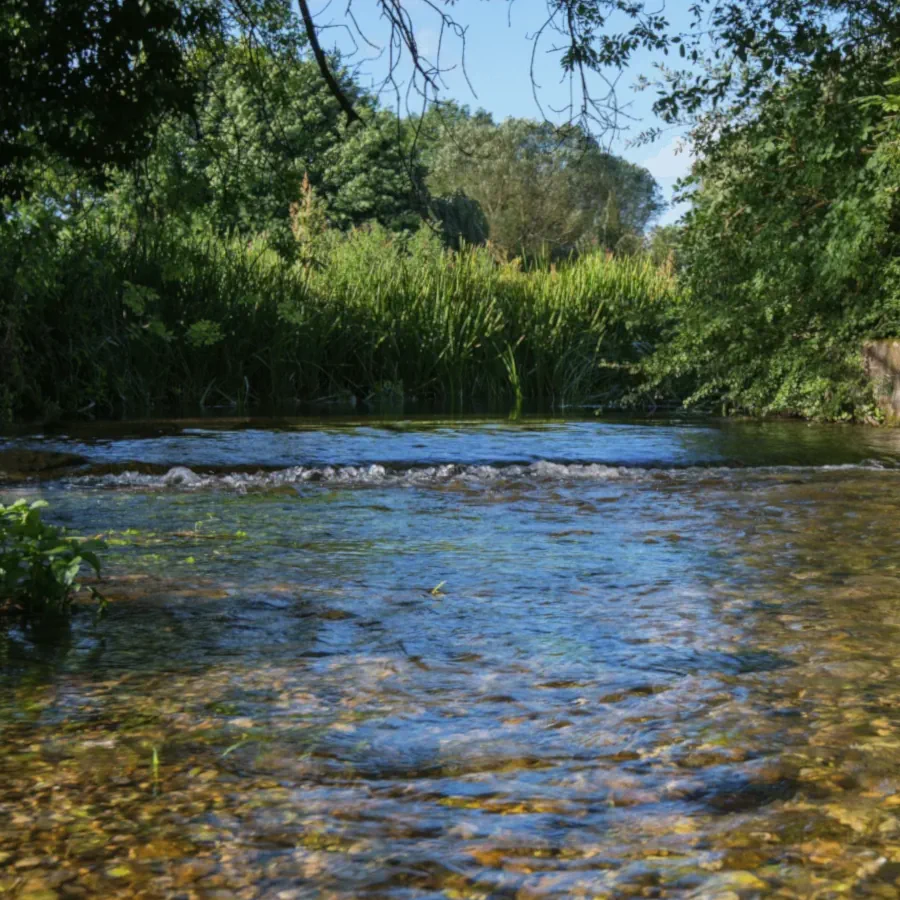
- Chalk Streams: three corridors, the River Test (an SSSI), the Itchen headwaters and the Loddon, described by the council as a valuable and globally restricted habitat.
- Hedgerows: species-rich hedgerow enhancement drove many of the gains in approved biodiversity gain plans, and 45% of the uplift at the Old Rectory Farm habitat bank.
- Lowland Heathland: Silchester Common, dry lowland heath dominated by heather, bell heather and gorse, with the Thames Basin Heaths SPA in the north-east corner.
- Lowland Meadow: a listed priority habitat; priority habitats in total cover 8,434 hectares, 13% of the borough.
- Parkland: Highclere Park SSSI, with parkland landscape types identified in the Landscape Character Assessment.
- Road Verges: 40 Road Verges of Ecological Importance are designated in the borough.
Basingstoke and Deane LPA BNG Planning
High distinctiveness habitats such as lowland heath and ancient woodland are essential for meaningful biodiversity net gain and require careful protection and management.
Lower distinctiveness habitats like improved grassland and secondary woodland provide opportunities for flexible habitat creation and enhancement.

Basingstoke
Tadley
Whitchurch
Get notified of a scheme
We do not currently have any schemes covering this LPA.
Get notified when a scheme is available in this area.
Discover Schemes in
Basingstoke and Deane LPA
LPA
Restoring ecosystems and creating sustainable habitats
through BNG and nutrient mitigation.
Shavington Estate
Shavington Estate
Hurst Farm
Hurst Farm
Essex BNG at Priors Farm
Essex BNG at Priors Farm

Somerset BNG Scheme
Trinity Farm & Eastcombe Fields
Tees Nutrient Mitigation
Tees Nutrient Mitigation Scheme
.jpg)
Wiltshire BNG at Lydeway
Land at Lydeway
.jpg)
Herefordshire BNG at Hampton Wafre
Hampton Wafre Farm
Are you looking to start a BNG scheme?
Talk to Greenshank and explore the opportunities we offer through your land.
Latest News
A step-by-step guide for landowners looking to sell their land as BNG units, and how Greenshank can help at every stage of the process.
.webp)
Find out how biodiversity net gain legislation works under the Environment Act 2021, what it requires, and which developments are exempt.
Find out how nutrient mitigation schemes work for landowners, how nutrient credits are generated, and how to combine nutrient and BNG income.