
Open Mosaic Habitats on Previously Developed Land BNG Units
High
Urban

Trusted by Developers and Landowners







What are Open Mosaic Habitats on Previously Developed Land?
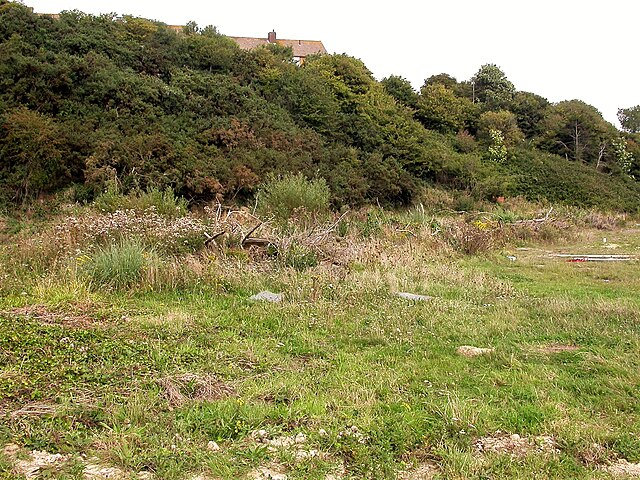
Open Mosaic Habitats on previously developed land are brownfield sites where disturbance, bare substrates, and early successional vegetation create a structurally diverse mosaic. The habitat supports specialised flora and invertebrates that depend on skeletal soils, bare ground, and pioneer plant communities.
The mosaic typically includes bare ground, ephemeral and short perennial vegetation, flower-rich open grassland, scrub patches, and occasional wet features.
Why It Matters for BNG
Open Mosaic Habitats deliver high distinctiveness units and are explicitly flagged in the Statutory Biodiversity Metric as difficult to recreate. Losses require like-for-like or better replacement.
Learn more about BNG for landowners →
.jpg)
Where You'll Find It
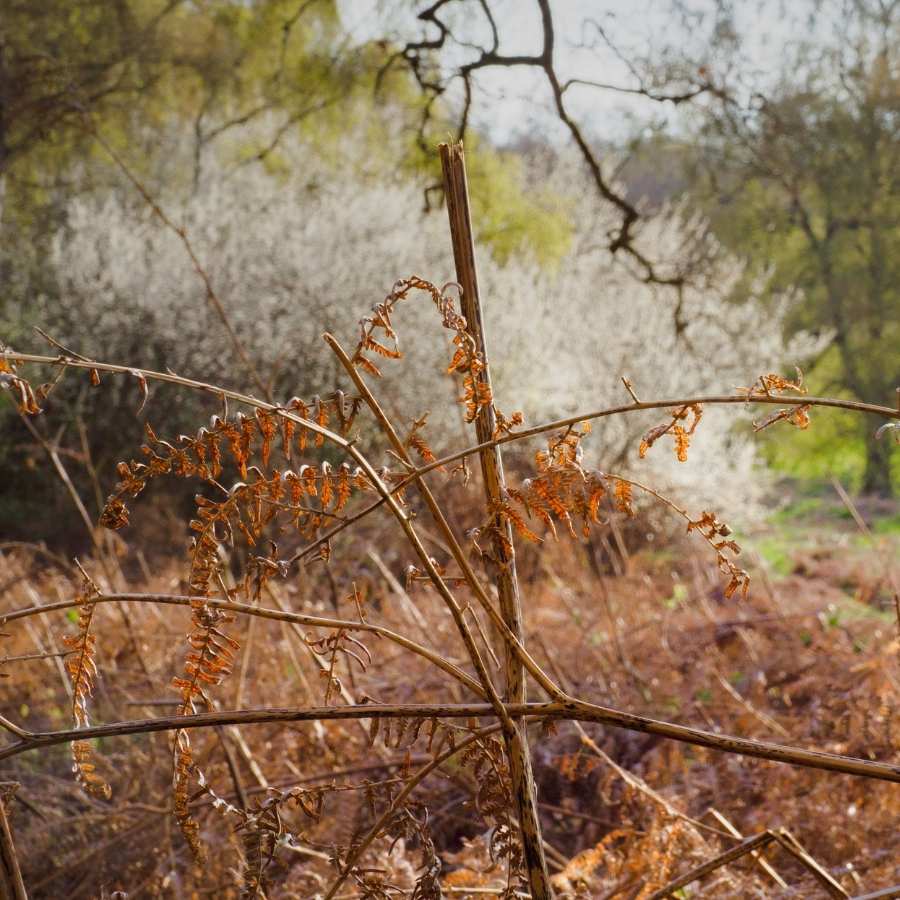
Open Mosaic Habitats occur on brownfield sites, concentrated in urban and post-industrial areas. Key locations include former industrial land, rail yards, derelict sites, old airfields, landfill caps, quarries, and spoil heaps where disturbance history and substrate characteristics persist.
The habitat requires a minimum patch size of 0.25 hectares. Sites must have a known history of disturbance or clear evidence of soil removal, re-profiling, or severe modification such as made ground, spoil, or rubble.
Soil & Site Requirements
Open mosaic habitats favour skeletal soils with low nutrient status and varied substrates. Sites typically contain made ground, rubble, spoil, or heavily disturbed mineral soils with poor fertility. Bare ground, loose substrates, and micro-relief are essential features.
Drainage is typically free-draining to seasonally waterlogged, with small pools or wet hollows contributing to habitat diversity. The substrate must support early successional communities while preventing the site reverting to uniform grassland or dense scrub.
How New Open Mosaic Habitats on Previously Developed Land Is Created
Inputs
• Retain or create skeletal soils with low nutrient status
• Use made ground, rubble, spoil, or mineral subsoils without topsoil import
• Avoid amenity seeding or fertile topsoil application
• Ensure minimum patch size of 0.25 hectares
• Create varied micro-relief and substrate types
• Retain or introduce small pools or wet hollows where appropriate
• Allow natural colonisation from nearby brownfield sites
Management
• Maintain low-level disturbance to arrest succession
• Retain bare ground and loose substrates
• Control dense scrub or rank grassland through rotational clearance
• Avoid fertiliser application or nutrient enrichment
• Monitor invasive species and control to less than 5 percent cover
• Prevent conversion to standard amenity greenspace
Landscape
• Position creation adjacent to existing brownfield sites or urban ecological networks
• Link Open Mosaic Habitats to support invertebrate and reptile movement
• Locate where long-term disturbance regimes can be maintained
• Avoid sites where development pressure will force intensive landscaping
How Existing Open Mosaic Habitats on Previously Developed Land Is Improved
Inputs
• Retain or restore bare ground, rubble, and varied substrates
• Remove amenity topsoil or re-seeding that has enriched nutrient status
• Reintroduce skeletal soils or made ground where fertility has increased
• Control invasive species through targeted removal
Management
• Use rotational disturbance, scrub clearance, or light grazing to arrest succession
• Maintain multiple early successional elements including bare ground, ephemeral vegetation, and scrub patches
• Prevent uniform grassland or dense scrub from dominating through periodic intervention
• Avoid fertiliser, amenity mowing, or landscaping that homogenises the mosaic
Landscape
• Link open mosaic habitats with nearby brownfield sites or urban ecological networks
• Retain spatial variation and structural heterogeneity across the site
• Protect sites from conversion to standard amenity greenspace or intensive landscaping
• Manage at landscape scale to support invertebrate and reptile movement
Target Condition
Open Mosaic Habitats on previously developed land in their defined BNG condition should:
• Support multiple early successional elements including bare ground, ephemeral vegetation, flower-rich grassland, scrub patches, and wet features within the assessment area
• Demonstrate good structural heterogeneity at fine scale with varied substrates, rubble, micro-relief, and surface cracks
• Maintain pioneer elements and bare ground with succession arrested through ongoing disturbance or poor soils
• Contain characteristic early successional flora and, where recorded, notable invertebrate or plant assemblages
• Show minimal damaging modification with no extensive topsoil import, amenity re-seeding, or conversion to species-poor grassland
• Control invasive non-native plants to less than 5 percent cover
• Retain spatial variation forming a mosaic rather than uniform closed sward

The BNG Value of Open Mosaic Habitats on Previously Developed Land
• Distinctiveness: High
• Condition Potential: Can be maintained or enhanced through arrested succession, low-level disturbance, and protection from amenity landscaping
• Habitat Connectivity: Supports specialist brownfield flora and invertebrates, providing corridors within urban ecological networks
• Climate and Landscape Context: Stabilises disturbed ground, provides urban biodiversity refugia, and contributes to post-industrial landscape character
Species Typical of Open Mosaic Habitats on Previously Developed Land
Canopy or Primary Layer
• Sparse or absent tree cover
• Occasional birch (Betula pendula)
• Willow species (Salix spp.)
Shrub or Secondary Layer
• Bramble (Rubus fruticosus agg.)
• Gorse (Ulex europaeus)
• Broom (Cytisus scoparius)
Ground Flora or Understorey
• Oxford ragwort (Senecio squalidus)
• Coltsfoot (Tussilago farfara)
• Mosses and lichen crusts on bare substrates
.jpg)
.avif)
Frequently Asked Questions
What is Open Mosaic Habitats on previously developed land?
Open Mosaic Habitats on previously developed land is found on brownfield sites where disturbance and skeletal soils create a mosaic of bare ground, early successional vegetation, and structural diversity.
How is BNG measured here?
Condition is assessed using a bespoke urban Open Mosaic Habitats condition sheet in the Statutory Biodiversity Metric. Criteria focus on mosaic quality, arrested succession, species interest, and absence of damaging modification.
How can I achieve BNG?
Creation requires retaining or introducing skeletal soils, bare ground, and varied substrates without topsoil import or amenity seeding. Enhancement focuses on maintaining disturbance regimes, controlling succession, and preventing conversion to standard greenspace.
What is the BNG target condition?
Good condition requires multiple early successional elements, strong structural heterogeneity, arrested succession with bare ground retained, characteristic species assemblages, and minimal damaging modification or invasive cover.
What management is required?
Low-level disturbance to maintain bare ground and arrest succession, rotational scrub clearance, invasive species control, and avoidance of fertiliser or topsoil import. Management must prevent conversion to uniform grassland or amenity greenspace across the 30-year BNG period.
Exploring Other Habitats?
Hazel Scrub
Hazel scrub is a native scrub habitat dominated by hazel, typically forming dense multi-stemmed shrubs or coppice stools usually less than 5 metres in height. It commonly occurs along woodland edges, ride margins, hedgerow networks and as transitional scrub developing on former grassland or farmland.
Hazel scrub provides structural habitat for birds and small mammals and produces nuts, catkins and leaf litter that support invertebrates and woodland food webs. It may also function as a transitional habitat facilitating woodland regeneration.
Lowland Heathland
Lowland heathland is a semi-natural habitat dominated by dwarf shrubs growing on nutrient-poor, acidic soils in the lowland zone, generally below about 300 metres above sea level. The vegetation is typically dominated by ericaceous species such as heather, bell heather, and cross-leaved heath, often with gorse species.
Lowland heathland usually occurs as a mosaic habitat, containing patches of dwarf shrub heath alongside acid grassland, bare ground, scattered scrub or trees, and occasionally wet heath or small bog areas.
Bramble Scrub
Bramble scrub is a dense scrub habitat dominated by bramble , typically forming thick thickets between 2 and 3 metres in height. It commonly occurs along woodland margins, grassland edges, road and rail embankments, brownfield land and other disturbed areas as part of natural vegetation succession. All bramble scrub parcels are also recorded as poor condition in the metric, regardless of their structure or species composition.
Ready to buy your units?
Easily buy your BNG units online today to ensure compliance and positive environmental impact.