
Line of Trees BNG Units
Medium
Hedgerows and Lines of trees

Trusted by Developers and Landowners







What are Line of Trees?
A Line of Trees in BNG is a row or corridor of trees forming a clear linear feature in the landscape. It is made up of individual trees spaced closely enough to create a recognisable boundary or route through farmland, estates or river corridors. These lines often follow historic field edges, green lanes or trackways and can include banks or ditches alongside them.
Some lines are simple boundary features, while others hold greater ecological value because they contain mature or veteran trees, standing deadwood, cavities and other natural features that support birds, bats and invertebrates.
Why It Matters for BNG
Lines of trees are recognised as linear habitats and are assessed separately from area-based habitats such as grassland or woodland. Where present on a site, they form part of the baseline calculation and must be retained or replaced in line with BNG requirements if affected by development.
Learn more about BNG for landowners →
Where You'll Find It
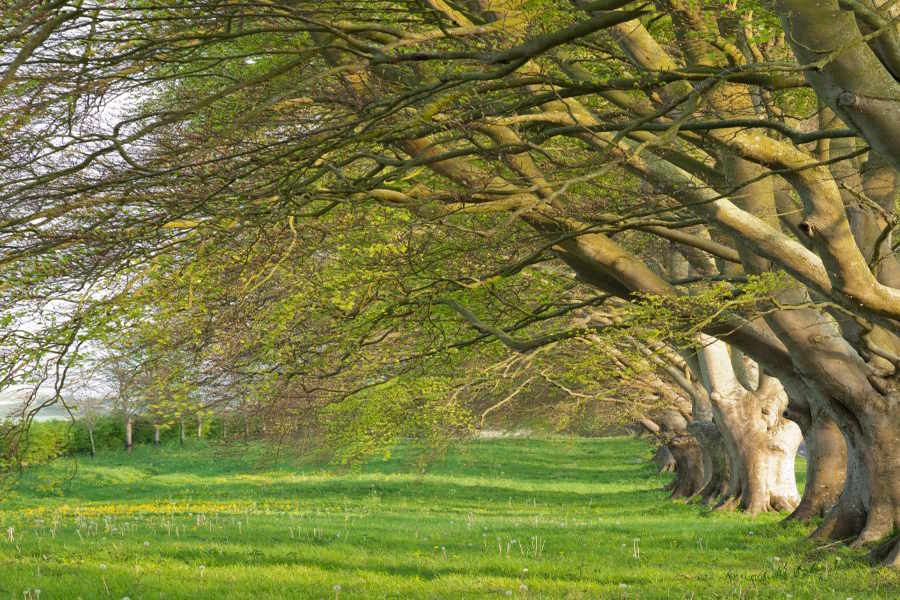
Lines of trees are typically found along rural field boundaries, estate drives, historic enclosure lines, green lanes and river corridors. They frequently occur where traditional hedgerows have been removed but boundary trees retained, or where planted tree lines were established as shelter belts or landscape features.
Soil & Site Requirements
Lines of trees establish on a wide range of soils, including brown earths, clay loams, calcareous soils and moderately acidic substrates. Suitable sites require sufficient rooting depth, stable boundary alignments and limited disturbance from cultivation. For higher condition scoring, the presence of an undisturbed vegetated buffer strip of at least 6 meters on both sides significantly improves ecological integrity and protection from agricultural impacts.
How New Line of Trees Are Created
Inputs
• Plant predominantly native tree species suited to local soil and landscape character
• Use appropriate spacing to form a continuous linear canopy over time
• Avoid ornamental or non-native species dominance
• Protect young trees from browsing, compaction and mechanical damage
• Establish on stable boundary lines with adequate rooting depth
Management
• Allow trees to mature naturally to develop canopy continuity
• Maintain structural diversity with a mix of age classes
• Retain standing and attached deadwood where safe to do so
• Prevent excessive pruning that breaks canopy structure
• Monitor and manage pests, disease and livestock damage
Landscape
• Reinforce historic field boundaries and estate alignments
• Connect woodland blocks, hedgerows and riparian corridors
• Maintain buffer strips (minimum 6 metres where possible)
• Avoid fragmentation through unnecessary removal or wide gaps
How Existing Line of Trees Are Improved
Inputs
• Replace non-native trees where native cover falls below 70%.
• Infill canopy gaps so no single gap exceeds 5 metres.
• Keep total canopy gaps below 10% of the line length.
• Maintain a vegetated buffer strip of at least 6 metres on both sides.
• Protect root zones, especially around veteran trees.
Management
• Retain at least one tree with veteran features (cavities, deadwood, loose bark or ivy).
• Maintain ≥95% of trees in healthy condition.
• Prevent damage from livestock, machinery or compaction.
• Avoid works that create new canopy breaks over 5 metres.
Landscape
• Maintain continuous centre-line alignment.
• Record and manage parallel lines separately.
• Prevent fragmentation that would break canopy continuity thresholds.
Target Condition
A Line of Trees in Good BNG condition should:
• Contain at least 70% native tree species
• Maintain strong canopy continuity
• Include veteran or ecological niche features
• Be protected by functional buffer strips
• Demonstrate high overall tree health
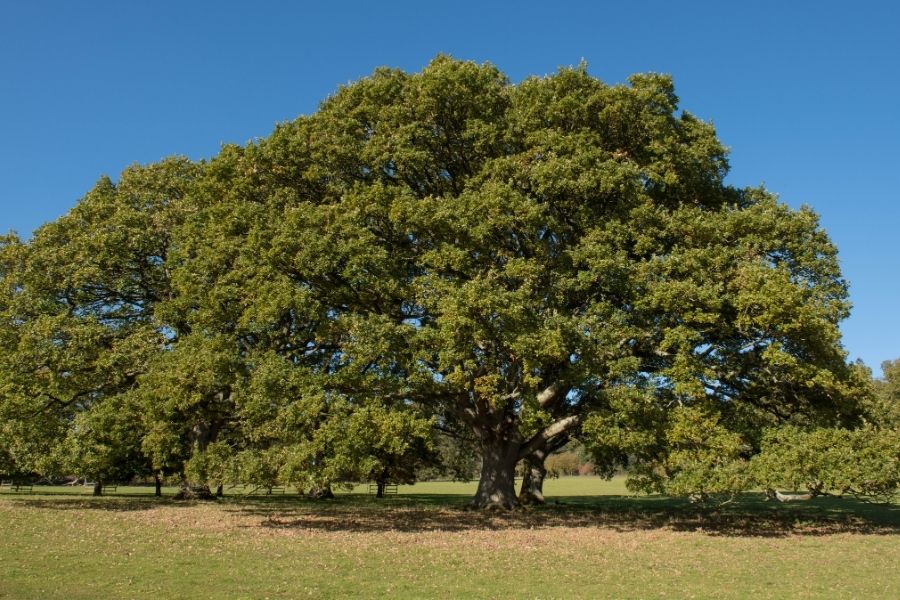
The BNG Value of Line of Trees
• Distinctiveness: Medium
• Condition Potential: Strong uplift where canopy continuity, native species dominance and buffer protection are improved
• Restoration Pathway: Primarily enhancement through gap planting, buffer establishment and veteran feature retention rather than rapid new creation
• Strategic Value: Important linear corridors linking woodland, hedgerows and riparian habitats across agricultural and estate landscapes
Species Typical of Line of Trees
Canopy or Primary Layer
• Pedunculate oak (Quercus robur)
• Sessile oak (Quercus petraea)
• Ash (Fraxinus excelsior)
• Field maple (Acer campestre)
• Beech (Fagus sylvatica)
• Lime (Tilia cordata)
Secondary or Associated Layer
• Hawthorn (Crataegus monogyna)
• Blackthorn (Prunus spinosa)
• Hazel (Corylus avellana)
• Holly (Ilex aquifolium)
Ground Flora or Margin Layer
• Dog’s mercury (Mercurialis perennis)
• Cow parsley (Anthriscus sylvestris)
• Red campion (Silene dioica)
• Nettle (Urtica dioica)
• Woodland and grassland margin species depending on soil type
.jpg)
.avif)
Frequently Asked Questions
What is a Line of Trees?
A Line of Trees is a linear arrangement of trees forming a boundary feature more than 20 metres long and generally less than 5 metres wide between major stems. It lacks the dense shrub structure of a hedgerow.
How is BNG measured for Lines of Trees?
BNG for Lines of Trees is measured by recording the length of the tree line (along its centre line) and assessing its ecological quality. The metric considers what type of line it is (standard or ecologically valuable), how good its condition is and how long it will take to reach or maintain its target condition.
How can I achieve BNG with Lines of Trees?
BNG can be achieved by enhancing existing lines through improving native species dominance, increasing canopy continuity, protecting buffer zones and retaining veteran features, or by establishing new tree lines on appropriate boundaries.
What is the BNG target condition?
The key criteria are ≥70% native tree species, continuous canopy with limited gaps, presence of veteran features, undisturbed buffer strips and high tree health across the line.
What management is required?
Management focuses on maintaining canopy continuity, protecting root zones, retaining veteran and deadwood features, controlling livestock damage and ensuring long-term structural development over decades.
Exploring Other Habitats?
-.webp)
Arable field margins pollen and nectar are grass margins around arable fields sown with wildflowers and legumes managed specifically to provide pollen and nectar resources for invertebrates. The mix must include at least four nectar-rich flowering species and the margin is kept low-input and rotationally cut to maintain flowering through the season. The arable field must remain in a crop rotation including an arable crop.
Unlike wild bird seed margins, the management objective here is flowering continuity for pollinators rather than seed retention for birds. This habitat type sits within the Cropland broad habitat in the BNG metric and is classified separately from tussocky margins, cultivated margins and game bird mix.
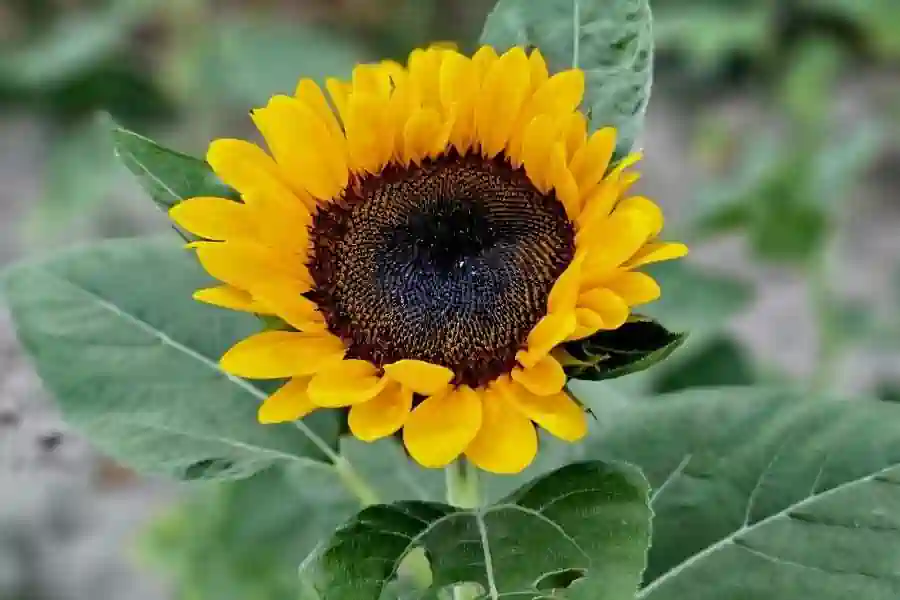
Arable field margins game bird mix are margins, strips, blocks or corners around arable fields sown with wild bird cover crops and left unharvested over winter so that seed produced by the plants remains available to farmland wildlife. The arable field must be in a crop rotation that includes an arable crop, such as wheat, barley, maize or oats, even if in certain years the field is in temporary grass, set-aside or fallow.
Mixes typically combine seed-bearing cereals, brassicas and oil-rich crops to provide food through the winter hungry gap and standing cover for gamebirds and declining farmland bird species.
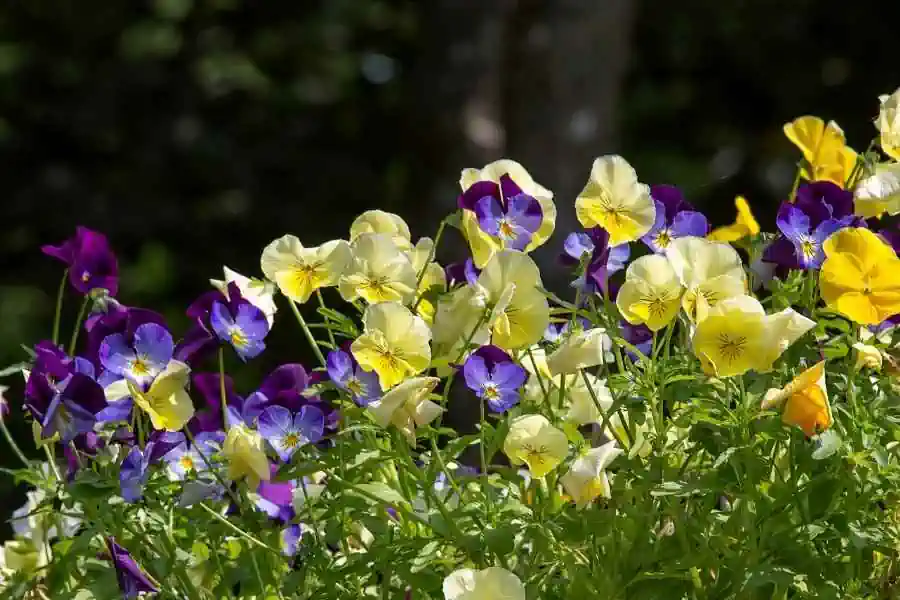
Arable field margins cultivated annually are strips along the edges of arable fields, typically 2–12 metres wide, managed under a low-input regime to support annual arable plants. They are lightly cultivated each year, usually in late summer or autumn, without herbicide or fertiliser, creating the open, disturbed soil conditions that annual arable flora requires to germinate.
Ready to buy your units?
Easily buy your BNG units online today to ensure compliance and positive environmental impact.