
A Developer's Checklist for BNG Council Submissions

Since 2024, many developments in England have been subject to mandatory biodiversity net gain (BNG)1 with nationally significant infrastructure projects (NSIPs) following suit on 2 November 2026.2
This means developments subject to BNG must deliver at least a 10% increase in biodiversity value as a condition of planning permission. They can do that through on-site or off-site enhancements or, as a last resort, by buying statutory biodiversity credits from the government.
This requires developers to give the local planning authority (LPA) BNG information at two stages: with the planning application, and, once permission is granted, in a biodiversity gain plan that the LPA must approve before work begins.3
At the time of writing, no single, national BNG checklist has been issued by the government, although many LPAs across England have published checklists for submissions.4
We've looked at information from several LPAs, including checklists5,6,7 and guides,8 to create a run-down of what developers submitting BNG applications must include for LPAs.
Does the Development Trigger Mandatory BNG?
One of the first things to establish is whether the project is subject to BNG. The developer must explain why BNG requirements do not apply, with supporting information.9
The list of current exemptions is published on GOV.UK. Since 6 August 2026, planning applications for development on sites of 0.2 hectares or below, and for temporary development of five years or less, can also be exempt, provided no on-site priority habitat is affected. The self-build and custom build exemption has ended for applications made on or after that date.10
Carry Out Detailed Ecological Surveys
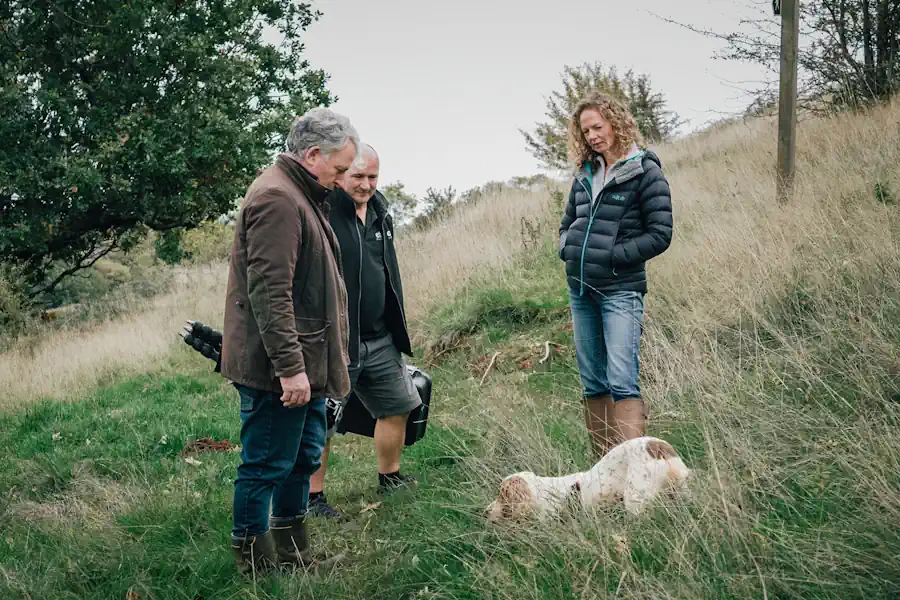
If the development does trigger mandatory BNG, a competent person (in practice, usually an ecologist) should carry out an on-site assessment to identify and establish the condition and distinctiveness of habitats within or affected by the project.
This also supports a statement of the site's biodiversity value before development, including whether any earlier activity on the site has reduced it.
The submission should also describe any irreplaceable habitat on the land, and the biodiversity gain plan must cover any impacts from development.
Include the Results from the Appropriate BNG Metric Tool
A BNG council submission must also include the pre-development value of the site, as calculated in the appropriate BNG metric tool. The post-development value goes into the biodiversity gain plan once permission is granted, although some LPAs ask for a draft post-development calculation with the application.11
Most projects will use the statutory biodiversity metric,12 but those meeting the criteria below can use the streamlined small sites metric (SSM):13
- A residential development where the number of dwellings is between 1 and 9 on a site of an area 1 hectare or less, or if the number of dwellings is unknown, the site area is less than 0.5 hectares
- A commercial development where floor space created is less than 1,000 square metres or total site area is less than 1 hectare
- A development that is not the winning and working of minerals or the use of land for mineral-working deposits
- A development that is not waste development
However, the SSM cannot be used where priority habitats, European protected species, or statutory protected sites or habitats are present, or where a site includes habitats the SSM does not cover, such as those of high or very high distinctiveness.
Major Developments and Sites Requiring Off-Site Gains
Larger-scale projects, and developments that cannot achieve the minimum 10% uplift on-site, may need to provide further documents. LPAs may ask for some with the planning application. The rest are needed for the biodiversity gain plan after permission is granted.
Draft Biodiversity Gain Plan
This important document lists how the development's design followed the biodiversity gain hierarchy,14 includes details of any retained, enhanced, or newly created habitat, as well as the impact on on-site biodiversity, and proposed off-site solutions. A draft is not a national requirement at application stage, though LPAs may ask for one. Every development subject to BNG, large or small, needs a final plan, which is submitted after permission is granted and approved before work begins.15
Agreements About Off-Site Solutions
Developers may also have to include details about the post-development condition of habitats, supported by information about how BNG units will be secured, either through conservation covenants or section 106 agreements.
The biodiversity gain plan must also evidence that any off-site units are registered on the biodiversity gain sites register16 and allocated to the development. Developers who need statutory biodiversity credits, a last resort, must provide proof of purchase.
Habitat Management and Monitoring Plans
The submission may also include a Habitat Management and Monitoring Plan (HMMP), providing details about the care, maintenance and oversight of habitat over a minimum of 30 years. It should also include information about what measures can be taken should the habitats underperform.
We Can Help You Meet Your BNG Requirements
At Greenshank, our experienced team supports developers at every stage of the BNG process.
Whether you need access to ecological experts or want to find biodiversity units to meet your BNG requirements, we can help.
Email us at sales@greenshank-environmental.com or fill in this contact form and we'll be in touch as soon as possible.

How Does Deforestation Affect Biodiversity?
How deforestation affects UK and global biodiversity - from habitat loss and species extinction to disrupted ecosystems - and how BNG can help.
Biodiversity Net Gain
How to Find BNG Units Secured via Conservation Covenants
Comparing and contrasting Section 106 agreements and conservation covenants for developers looking for BNG units.
Biodiversity Net Gain
How to Prepare Your Land for BNG Opportunities
A step-by-step guide for landowners looking to sell their land as BNG units, and how Greenshank can help at every stage of the process.
Biodiversity Net Gain
Ready to buy your units?
Easily buy your BNG units online today to ensure compliance and positive environmental impact.