
A Landowner's Guide to Nutrient Mitigation Schemes


Proposed housing developments in specific areas of England and Wales face a singular barrier to planning permission.1
Projects on sites within protected habitats sites (known as catchments) that are in 'unfavourable condition' because of nitrogen or phosphorus pollution must not add to the catchment's existing pollution.
Instead, developers must take steps to mitigate or offset more of these nutrients introduced by their project so they have no impact (or are neutral) for decades to come.
Developments in these particular areas are stalled because the solutions they need are in short supply - but this is where landowners can come in.
This guide will explore nutrient mitigation schemes, how they work, and why they could be a potential opportunity for many landowners.
What Is a Nutrient Mitigation Scheme and Why Are They Needed?
In the simplest terms, a nutrient mitigation scheme reduces the amount of nitrogen or phosphorus entering protected water bodies in England and Wales.
Measures include upgrading wastewater treatment works, creating a wetland area designed to capture agricultural run-off, or restoring or establishing grasslands or woodlands.

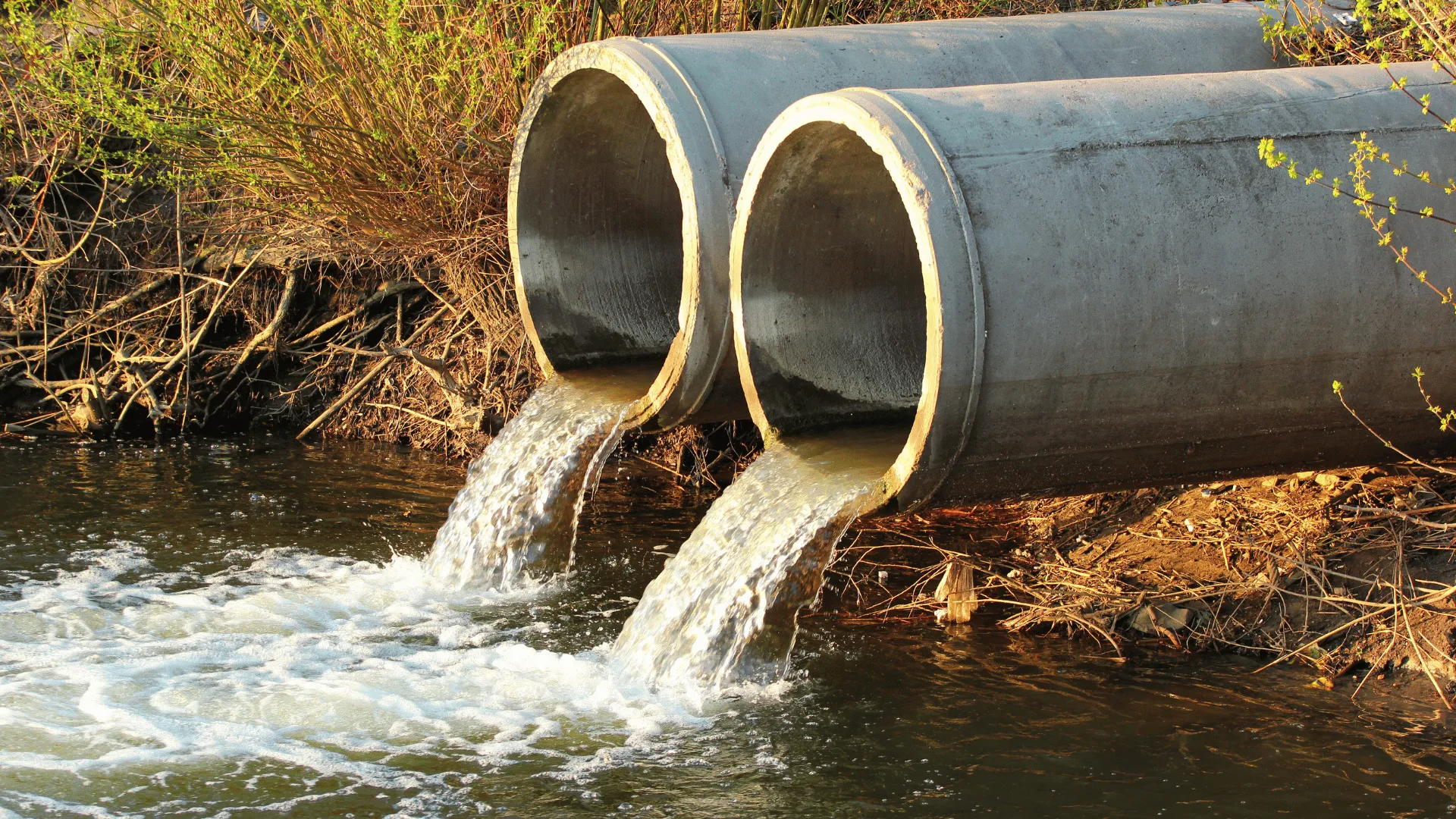
These solutions are needed to reverse years of agricultural runoff and wastewater discharges2 that have left many of England's most ecologically important rivers, estuaries, and lakes that were deemed to be in 'unfavourable condition', according to Natural England.3
Excess nutrient levels damage aquatic habitats, cause algal blooms that reduce oxygen levels and threaten species - including rare invertebrates, fish, and birds - which depend on high water quality.4
Where a river, estuary, or lake is designated as protected under Conservation of Habitats and Species Regulations 2017,5 activity that could degrade its condition further - including new development in its catchment - requires an appropriate assessment.
In situations where the introduction of more nutrients through development cannot be excluded, planning permission is refused, unless nutrient mitigation measures can be implemented.
How Nutrient Mitigation Schemes Generate Nutrient Credits
Nutrient credits are generated by mitigation schemes that demonstrably reduce levels of nitrogen or phosphorus leaving the land, compared to pre-development, known as the baseline.

A nutrient credit represents one kilogram per year of nitrogen or phosphorus removed from the catchment, and is measured using a recognised nutrient budget calculator for specific catchments.
The calculators for England are listed here, while the tool for developers in Wales is here.
The credit yield from a nutrient mitigation scheme depends on the difference between what the land currently produces and post-development output.
For example, intensively fertilised arable land has the greatest potential to generate significant nutrient credits through land-use change.
The soil type and hydrology also affect nutrient retention, and whether the land drains to the protected watercourse, directly or indirectly, also affects the assessment.
Landowners launching nutrient mitigation schemes are legally required to manage their land in a specific way for between 80 and 125 years and, in some instances, longer.6
Which Catchments Require Nutrient Mitigation Schemes?
In England the River Eden, River Wye, River Camel, River Wensum, River Lugg, the Somerset Levels, Bassenthwaite Lake, and Poole Harbour, are among the designated sensitive catchment areas where nutrient levels must be mitigated.

According to Nature England's map, they are all sites of special scientific interest (SSIs) and include some of the country's most ecologically significant river systems and coastal areas.
Nine rivers in Wales have been designated as Special Areas of Conservation (SACs) under the Conservation of Habitats and Species Regulations 2017.7 According to DataMapWales, they are the Afonydd Cleddau, Eden, Gwyrfai, Teifi, Tywi, Glaslyn, Dee, Usk and Wye.
Combining Nutrient Mitigation Schemes with Other Agri-Environment Options
In some cases, but not all, agri-environment schemes, such as Countryside Stewardship and Sustainable Farming can be combined with nutrient mitigation schemes.
Land enhancement funded by an agri-environment scheme can't be sold as a nutrient credit, but it can be used to create further habitat enhancements on top of an existing agri-environment agreement. You can find more details here.
What Can Landowners Earn from Nutrient Mitigation?
Nutrient credit prices vary by catchment, by supply and demand at the time of sale, and by the specific characteristics of the credits being sold.

However, catchments with limited mitigation supply but high development demand, phosphorus credits have sold for up to £100,000 per kilogram. Nitrogen credits typically command lower prices per kilogram but are needed in higher quantities.8
Nutrient credits are sold under legally binding agreements,9 usually planning obligations, conservation covenants,10 and contractual agreements with the scheme operator. In many cases, they enable revenues to be locked in for 80 to 125 years,11 providing landowners with an attractive degree of income certainty.
As specialists, we can conduct an independent assessment to give you a realistic estimate of the credit yield your land can support, and a view on likely credit values based on current market conditions.
Monitoring and Verification of Nutrient Mitigation Schemes
Every nutrient mitigation scheme must be monitored throughout its operational life to confirm it is being maintained as agreed, and the appropriate nutrient reduction is actually being delivered.

The shape that monitoring takes will vary according to the catchment and nutrient mitigation scheme type, but they could include annual management plan compliance checks, periodic soil testing, or water quality monitoring in drains or ditches adjacent to the scheme.
It's important for landowners to understand the monitoring regime before launching a nutrient mitigation scheme.
They should know what will be measured, how often, and by whom, as well as details of any consequences, if the scheme does not perform as expected.
The Risks and Considerations for Landowners
Long-Term Land Use Commitment
The most significant risk for any landowner entering a nutrient mitigation scheme is the commitment it creates about the land.
An agreement for 80 years would cover multiple generations and multiple likely changes in the agricultural policy landscape.
Although this longevity is a major draw for nutrient credits and nutrient mitigation schemes, the legal agreements underpinning them could also prevent any changes to the land's use in the future.

Not all scheme operators offer the same exit provisions, and the terms matter enormously over a multi-decade commitment. Landowners could be found in breach of the nutrient mitigation scheme agreement and potentially face legal action or be required to reimburse credit purchasers.
Landowners should take independent legal advice to understand what happens if circumstances change - if the land is sold, inherited, gifted, or if financial difficulty makes maintaining the scheme challenging.
Scheme Operator Quality and Financial Standing
The private market for nutrient credits is relatively new, and the quality and financial standing of scheme operators can vary.
Before committing to a scheme, landowners should do their homework on a proposed scheme operator, from their track record and financial position, to the insurance and security arrangements in place for the scheme income.
It's also important to know whether their approach to nutrient budget calculation is accepted by Natural England and local planning authorities in practice.
Plans for nutrient mitigation schemes backed by robust monitoring data from an operator with a credible track record of environmental delivery will face less challenge from planning officers than schemes from operators with little or no history of completed, verified schemes.
We welcome this scrutiny and actively encourage landowners to seek independent advice before signing any agreement with us or with any other scheme operator.
Policy and Market Risk
Nutrient neutrality policy is likely to change over time.12
the government's 2023 attempt to scrap nutrient neutrality rules was defeated by a House of Lords vote,13 but the policy landscape is one of ever-shifting sands.
A landowner whose nutrient mitigation scheme income depends on developer demand for credits faces the possibility that policy changes could reduce that demand.
One solution to this is to diversify income streams where possible, by combining nutrient credits with biodiversity net gain units, carbon credits, and agri-environment payments.
How Nutrient Neutrality Works for Developers - And Why It Creates Landowner Opportunity
When a developer submits a planning application for residential or other project in a nutrient neutrality catchment, planning permission will not be granted unless the developer can prove the scheme will not add to the catchment's overall nutrient load.14

The developer must submit a nutrient budget calculation (using the tool for their specific catchment, listed above) with a per-year figure of how much nitrogen or phosphorus will be generated over the project's lifetime.
Once the developer knows how many nutrient units they need to offset, they must source them from schemes within the same catchment.15 Finding acceptable credits is often a bottleneck - not the cost, but the availability of credits in the right catchment and at the right time.
This scarcity is what creates an opportunity for landowners who can supply the nutrient credits developers need.
How We Support Nutrient Mitigation Scheme Development
We work with landowners across nutrient neutrality catchments to assess the potential for nutrient mitigation, managing the full process from initial assessment through to credit verification and sale.
Our CEO, Dr Gabriel Connor Streich, contributed to Natural England's technical guidance on nutrient neutrality, and we are the only company deploying schemes using these proprietary methods, including drainage ditch management for nutrient reduction.

We develop standalone mitigation schemes or integrated solutions that are designed to last, backed by management plans that are practical and deliverable, legal agreements that protect the landowner's position, and monitoring arrangements that satisfy all regulatory requirements.
Our experience across multiple catchments means we can offer insightful advice on the nutrient budget calculation approach, the land management options most likely to generate viable nutrient credit volumes, and the best structure for combining nutrient credits with other income streams.
Talk to Us About Your Nutrient Mitigation Plans
If you own or manage land in a nutrient neutrality catchment and want to find out whether it could host a scheme, talk to us.
If you're a developer, we operate nutrient mitigation schemes across several nutrient neutrality areas. We can connect you with the credits you need to secure planning permission quickly and cost effectively.
Email us at sales@greenshank-environmental.com or fill in this contact form and we'll be in touch as soon as possible.
Sources
Ready to buy your units?
Easily buy your BNG units online today to ensure compliance and positive environmental impact.