
BNG Trading Rules for Developers

Four rules sit at the heart of the UK's biodiversity net gain (BNG) framework.1 For developers of most projects requiring planning permission in England, sticking to this quartet of trading rules is not only a legal requirement, but it can also be a complex undertaking.
They carry such weight that any biodiversity gain plan which does not comply with the trading rules is unlikely to be approved by a local planning authority. But why are they so important?
This guide sets out all four trading rules of the statutory biodiversity metric, explains how they work in practice, and looks in depth at Rule 4.
What Are the BNG Rules?
.webp)
From 12 February 2024,2 developers of most major projects in England were required to leave habitats within the red line boundary of projects in a better condition than they found them, by a measure of at least 10%; small sites followed from 2 April 2024.
The pathway to achieving this begins before a design has even been finalised, thanks to the mitigation hierarchy.3 It requires developers to prioritise avoiding any environmental impact at all. If that's not possible, the biodiversity hierarchy kicks in. That demands developers minimise any harm or damage, before restoring and/or offsetting any that does take place.
Developments that trigger BNG must use the statutory biodiversity metric tool to assess and measure the biodiversity value of their sites, both pre- and post-development, and get a percentage value of the units needed to achieve the minimum 10% uplift.4
It's at this point in the process that the four BNG trading rules kick in.
Rule 1: Follow the Trading Rules
.webp)
The first trading rule requires habitat loss to be compensated for on a like-for-like or like-for-better basis. For example, priority habitats of high or very high distinctiveness cannot be substituted with a larger number of off-site units from lower distinctiveness categories.
The statutory biodiversity metric tool classifies each habitat by type; area, hedgerow, and watercourse, and assigns five distinctiveness levels; very low, low, medium, high, and very high,5 reflecting the unique ecological characteristics of each one.
Rule 1 also sets out minimum establishment and enhancement thresholds for each habitat type to compensate for specific habitat losses, up to the point of no net loss.
For developments including on-site habitats with different distinctiveness levels, the trading rules are applied habitat by habitat. So low distinctiveness modified grassland and a medium distinctiveness hedgerow are treated separately within the metric.
On-site new habitat offers the strongest route to trading rules compliance, since the habitat is being created within the project's own red line boundary, under the developer's control.
That said, rule 1 does apply to off-site biodiversity units, bought from habitat banks. A developer sourcing off-site gains must ensure that all units match or exceed the type and distinctiveness of any habitat lost.6
Rule 2: The Minimum 10% Uplift Applies to Each Unit Type Separately
Biodiversity net gain requires a minimum 10% increase in biodiversity units, but it applies separately to each of the three habitat types: area units, hedgerow units, and watercourse units.
These three modules operate independently within the metric tool, and biodiversity net gain units cannot be summed, converted or traded between types.7
In practice, that means a developer can't make up a shortfall in watercourse net gain by adding more area unit gains, or offset a hedgerow unit deficit with extra watercourse units.
All three habitat types should be modelled as early as possible in the planning permission application process (if not the project's design process) to prevent a compliance gap from happening.
Rule 3: Use the Correct Metric Calculation Tool
To accurately apply the biodiversity metric formula, most developers will need to use the statutory metric calculation tool.
The simplified small sites metric (SSM) is available for developments that are residential developments of less than 10 dwellings or under one hectare, non-residential sites under 1,000 square metres of floor space, and which are not waste development.
Projects where only the habitats available in the SSM are on-site and don't include priority habitats, which also have no statutory protected sites or habitats and are not home to European protected species, can also use the SSM. The first three trading rules will still apply.
Developers fulfilling the above criteria can use the statutory metric calculation tool if they want to. However, if any protected sites or priority habitats are within 500m of the development site boundary, developers should consider whether an ecologist and the statutory tool are needed instead.8
To use the statutory tool, an ecologist (or otherwise competent person, as defined in British Standard BS 8683:2021)9 is needed, although using the SSM does not specifically require an ecologist.10 They must be able to accurately classify habitats, assess their condition, apply the correct distinctiveness levels drawn from the classification tables, and interpret the tool's outputs in the context of what the trading rules require.
Rule 4: Exceptional Ecological Circumstances
There is no Rule 4 in the SSM.11 It does appear in the statutory biodiversity metric tool, and should not be applied to most projects.
Rule 4 states: "In exceptional ecological circumstances, deviation from this biodiversity metric methodology may be permitted by the relevant planning authority."12
Understanding when Rule 4 applies, and when it does not, is one of the most technically complex aspects of BNG compliance, and one that local planning authorities are increasingly being asked to adjudicate on as mandatory biodiversity net gain beds in.
What Is BNG Rule 4?
Rule 4 applies when a proposed development presents a unique ecological opportunity that the standard trading rules cannot fully capture.13

Rather than being a workaround for routine or challenging compliance, Rule 4 is intended to unlock exceptional ecological outcomes, and can be used only when:
- The site's conditions, such as soil, hydrology and nutrient status, are right for restoring a wildlife-rich or historically significant habitat
- The project team has the expertise and resources to deliver that habitat with negligible risk of failure14
For example, Rule 4 would be applied to situations in which restoring historically important habitats, once abundant but now lost, is the most ecologically valuable outcome, even if the habitat being created isn't an exact match for habitat lost.
Likewise, the recreation of wetlands, meadows, or other rare habitats is a significantly greater ecological opportunity than just replacing specific habitats impacted by a development.

Rule 4 can also be applied to highly complex, landscape-scale changes, where the ecological value of the proposed new habitat as an integrated system is greater than the individual unit value of each separate habitat parcel, as calculated by the metric.
Large-scale projects creating heathland mosaics, restoring natural processes in river systems, or delivering integrated land management across extensive brownfield sites can benefit from Rule 4, where the metric tool cannot fully capture the biodiversity value of the habitat created as a functioning ecological unit.
Rule 4's 'Habitat Created in Advance' Function
Within Rule 4 is the 'habitat created in advance' function. Normally, the statutory biodiversity metric tool applies a temporal risk multiplier that assumes habitat creation will take time to reach its target ecological condition. A newly created grassland, for example, may not reach species-rich grassland condition for several years.
If the project team has enough expertise and the conditions are genuinely optimal to bring a habitat to its target condition faster than the metric's default assumptions, Rule 4's habitat created in advance mechanism can reduce the risk associated with the development.15
.webp)
However, the specific ecological benefits and skills involved to apply Rule 4 must be clearly documented for the relevant decision maker before the biodiversity gain plan is submitted.16
In all cases, the minimum 10% biodiversity net gain must be achieved.17
When Rule 4 Cannot Be Used
Rule 4 should not be used for most projects. Local planning authorities are increasingly aware of attempts to use it for common compliance challenges, but the BNG framework is explicit that "exceptional ecological circumstances" are needed to justify applying Rule 4.
Where Rule 4 is genuinely appropriate, it's vital to get in touch with the local planning authority before the biodiversity gain plan is submitted.18
LPAs need to be informed before a developer commits to a Rule 4 approach in their scheme design. That's because it must ultimately agree that exceptional ecological circumstances justifying Rule 4 are present, before the biodiversity gain condition can be discharged.
BNG Trading Rules and Nationally Significant Infrastructure Projects
Mandatory biodiversity net gain extends to nationally significant infrastructure projects (NSIPs) from 2 November 2026, from which time the same statutory biodiversity metric, trading rules and Rule 4 provisions will all apply.
For NSIPs, discussion of any proposed application of Rule 4 should happen with the Planning Inspectorate before the outline biodiversity gain plan is submitted, rather than with a local planning authority.
If a proposed Rule 4 application is changed after consent has been granted for an NSIP, developers should contact the relevant discharging authority before submitting an updated biodiversity gain plan.19
Given the scale and complexity of NSIPs, the circumstances under which Rule 4 might apply (large-scale landscape restoration, complex transitional habitat creation, or the restoration of historically important habitats) are, if anything, more likely to crop up than smaller planning applications.
Understanding the BNG Trading Rules in Depth
The biodiversity net gain framework encourages developers to go beyond merely compensating for habitat loss. It urges them to design schemes that deliver significant ecological improvements, wherever possible.
.webp)
BNG trading rules support this with the like-for-like or like-for-better standard, while the overall biodiversity gain objective drives developers toward exceeding that threshold, where site conditions allow.
The trading rules also recognise that some habitat types are not directly substitutable, particularly where the habitat lost is of very high distinctiveness. The statutory biodiversity metric tool includes a bespoke compensation option, which requires:
- Priority should be given to replacing losses with units of the same habitat type
- If this is not possible, losses should be replaced by appropriate units of the same habitat distinctiveness
- If this is not possible, losses should be replaced by appropriate area units of a high habitat distinctiveness20
Irreplaceable habitats, such as ancient woodland, or ancient and veteran trees, and similar features, sit outside the standard trading rules framework. Instead of a BNG-based offset, they need bespoke compensation agreed directly with the LPA or relevant decision maker.21
Off-Site Gains and Trading Rules Compliance
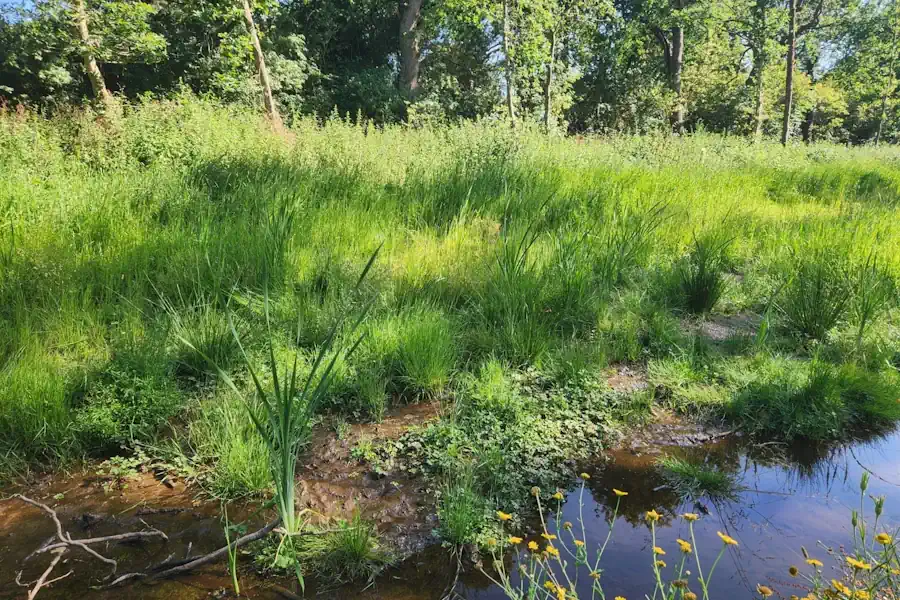
If the minimum 10% BNG uplift can't be achieved with on-site measures, developers can turn to off-site gains from habitat banks listed on the biodiversity gain site register to top up a shortfall.22
In these circumstances, the trading rules will still apply.23
Any units purchased from a habitat bank must be of the same type, and either match or exceed the distinctiveness of the habitat being compensated for. Local planning authorities will check that the off-site gains proposed in any biodiversity gain plan comply with the trading rules.
Habitat banks have their unit types documented, allowing developers and their ecologists to match the appropriate category to their specific BNG requirements.
Talk to us about sourcing BNG units from our network of registered habitat banks.
The Biodiversity Gain Plan and BNG Trading Rules Compliance
Every development subject to mandatory biodiversity net gain (exemptions are listed on gov.uk)24 must submit a biodiversity gain plan to the relevant local planning authority after planning permission has been granted.25
Within that biodiversity gain plan, compliance with the trading rules must be documented in granular detail. It should lay out the pre- and post-development biodiversity value of the site, the habitat creation and enhancement measures proposed, and how the trading rules have been applied, including the classification and distinctiveness of each habitat.
The statutory biodiversity metric or SSM tools generate outputs that show this habitat-by-habitat picture. Local planning authorities assessing trading rules compliance will use these outputs to ensure that each unit type has independently achieved the minimum 10% net gain requirement.26
Planning obligations or conservation covenants securing the on- or off-site elements of the biodiversity gain plan must also be in place. These legal mechanisms confirm not just the area and type of habitat creation proposed, but the management regime that will sustain the habitat created to its target condition over the required 30-year period.
A biodiversity gain plan without robust, confirmed legal security for its habitat creation elements will not satisfy the local planning authority. Building work cannot begin until the biodiversity gain plan has been formally approved by the relevant LPA.27

We Can Ensure You Comply with the Trading Rules
If you need support navigating the BNG trading rules or working out whether Rule 4 applies to your scheme, our team can help.
We'll guide you through the biodiversity gain plan process, from initial baseline habitat survey through to full approval by the relevant local planning authority, and can also help source compliant off-site biodiversity units from our national network of registered habitat banks.
Email us at sales@greenshank-environmental.com or fill in this contact form and we'll be in touch as soon as possible.
Sources
Ready to buy your units?
Easily buy your BNG units online today to ensure compliance and positive environmental impact.